
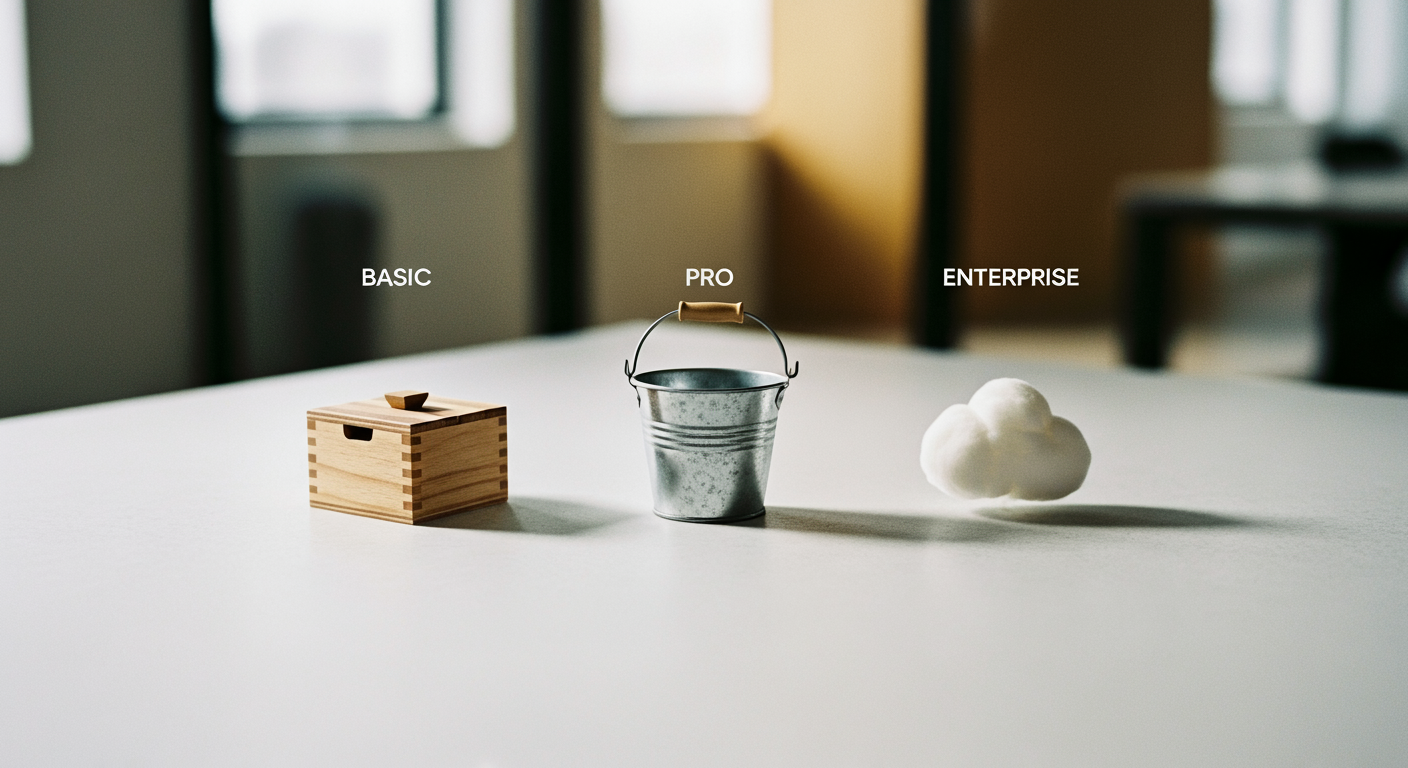
Most media companies think storage is a technology issue. It’s not, it’s a language problem. Netflix speaks three storage languages fluently: filesystems for production, platforms for collaboration, and object storage 42,000 hours of content. Companies who only speak one language pay 50x more than they should.
A major streaming platform spends $1million a year just storing 4K masters. That’s not waste. That’s insurance.
Object storage is for distribution and archive. Netflix manages over 30PB across 42,000 hours of content. Storing this in the wrong place would be suicide.
Filesystems (Block, SAN, NAS) are for production systems in a single data-center. If an editor scrubs 6K RED footage at 24fps, they’re reading a filesystem. Dailies systems and transcoders crunch through deliverables on filesystems.
Storage Platforms are used by global teams to collaborate. For a monthly fee, video, audio and vfx creatives can collaborate without boundaries on what feels like a magic cloud thumbdrive. You pay for the convenience of less friction.
Media companies need to master all three languages. Filesystems handle ingest and editing workloads where latency is key. Storage platforms enable global collaboration without the headache of VPN. Object storage is for distribution and archive costing pennies per gigabyte.
Companies that get this right create policies to get data to the right place, not obsess over one storage class. When a project finishes, automatically tier from $0.50/GB to $0.01/GB in 90 days. When an editor requests archived footage, life from archive, work, send back to object.
Your infrastructure should facilitate data movement, not create siloes. The question isn’t which storage language to use. It’s whether you can speak all three fluently enough to deliver creative output.
Read More