
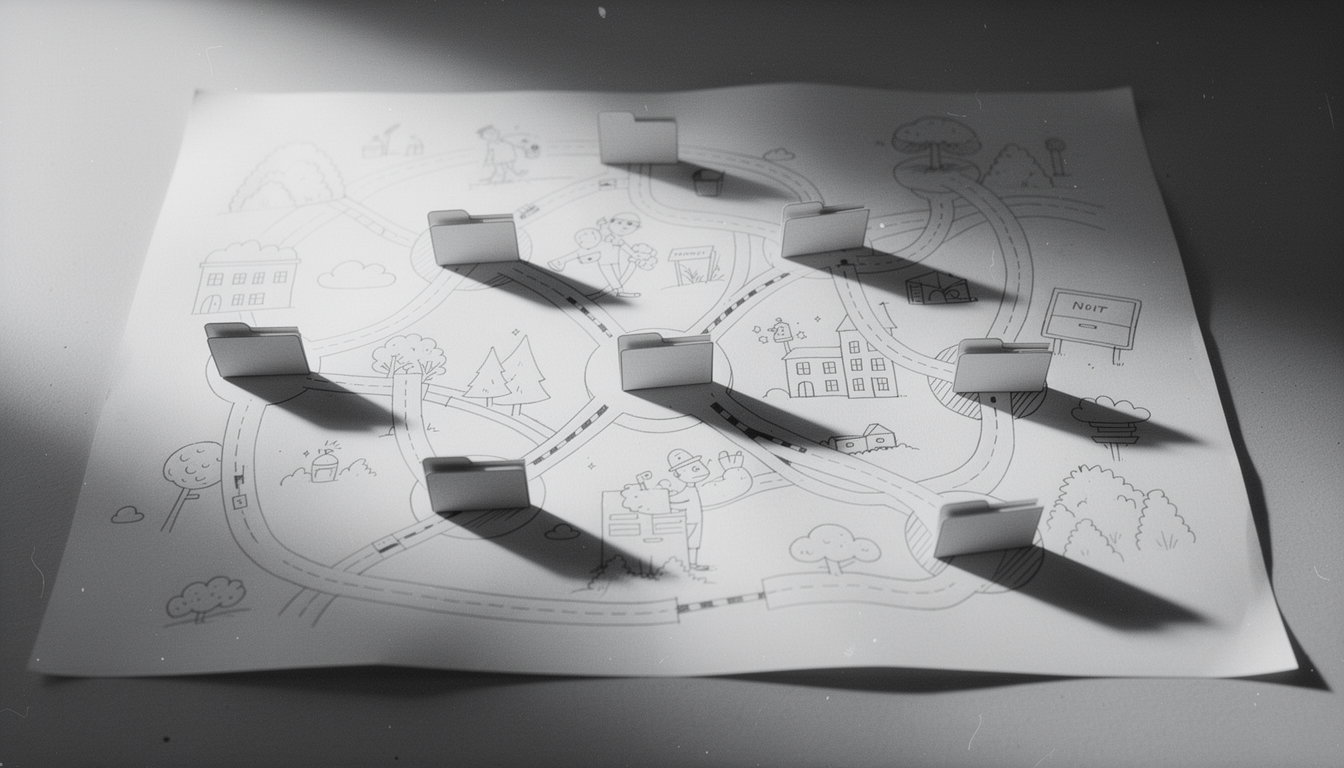
Every post-production facility I’ve walked into has the same unwritten rule: the folder structure is the bible. Nobody decided in a meeting. Nobody wrote a policy. It just happened, because folders are where human logic meets file systems, and humans are remarkably consistent when they organise work.
Take a post house working on a scripted drama. The folder tree tells you everything: /ShowName/Season02/Episode04/Conform/V3/ isn’t just a path; it’s a version history, a delivery milestone, and an implicit approval chain. When V3 exists, someone needs to sign off on it. When a Deliverables/ folder appears alongside Conform/, picture lock has happened. The folder didn’t enforce that workflow. The team did, by convention, thousands of times over.
VFX pipelines make the same point on a different scale. A typical shot folder /Sequence/SH0240/comp/v012/ describes the make up of what you see along with version count in plain text. When an approved/ subfolder appears inside that comp directory, it signals a supervisor decision has taken place, whether or not the pipeline system has triggered or captured that knowledge. Multiply across 1,200 shots on a feature film, and the folder structure becomes the most complete record of creative progress for the entire project.
Localisation and mastering workflows add another dimension. A path like /Title/Feature/Localisation/FR/5.1/ProResHQ/ gives you territory, audio specification, and the codec in seven tokens. That’s a delivery manifest written in directory names. When the QC_Pass/ folder gets populated, it means someone has verified that specific variant against a spec sheet; a compliance event buried in a file move.
Here’s the contrast that matters. The instinct in enterprise technology is to enforce structure from above: deploy a MAM, define taxonomy, mandate that every asset gets tagged on ingest. These systems work when they work, but they demand behavioural change from the people closest to the content. And the history of technology adoption tells us that the systems that require the most change fail more often than they succeed.
Folder structures already exist. They’ve existed since the first shared drive. What’s been missing isn’t structure, it’s the ability to understand the layer that humans have been baking in all along. Department, project, shot, version, approval state, delivery variant. All encoded in paths that nobody needed training to understand.
The opportunity isn’t to replace folders with something smarter. It’s to embrace the intelligence that’s there in plain sight. Create operational leverage by building workflows that are intuitive, searchable and actionable without asking an editor, compositor, or delivery manager to completely tear up the way they work.