
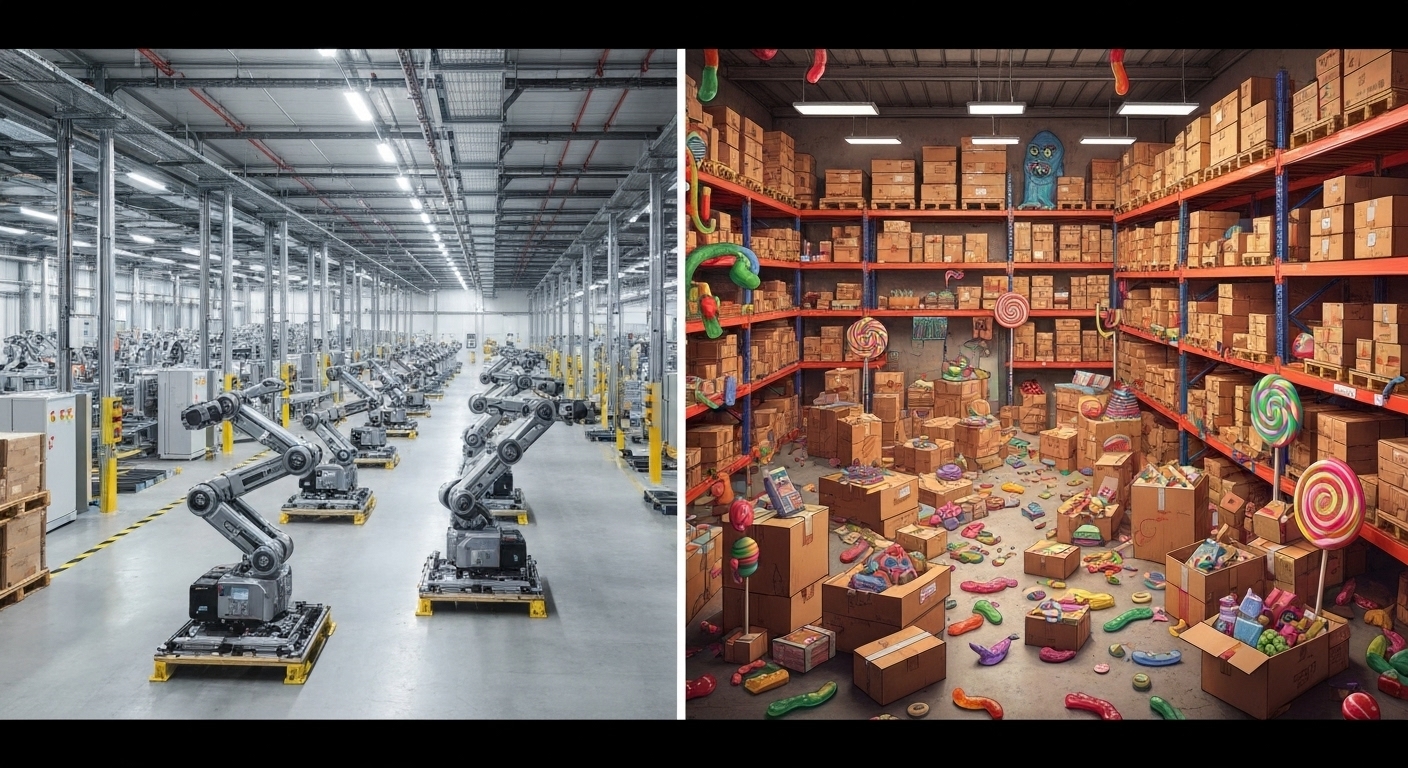
Imagine walking into your warehouse. Boxes stacked everywhere, nothing labeled, finding what you need takes hours. (the metaphor here is managing your company information without proper Enterprise Data Management). If you’re luck, you chat to the warehouse manager, who shrugs and says ” it’s in here somewhere.”
I’ve just described enterprise data management at most companies.
Instead of boxes, we’re talking about files and folders. Terabytes, maybe even Petabytes of business-critical data scattered across network drives, cloud platforms, and goodness knows where else. Instead of a few frustrated warehouse workers, there are entire teams burning time hunting for the right data.
What Do You Mean by Enterprise Data Management?
Contrary to what you may think, Enterprise Data Management isn’t an IT problem disguised as a business problem. It’s a business problem that happens to involve technology.
To put it simply, Enterprise Data Management is the process of organising, securing, and making your company’s data actually useful instead of just being sat on shared storage, where it’s the user’s responsibility to figure out where it is.
Good Enterprise Data Management is difference between having a warehouse full of unmarked boxes compared to a well-organised facility where you can find what you need in minutes
Think an Amazon fulfilment centre compared to a remote storage unit where you pay rent but can’t exactly remember what’s inside.
What’s the Key Element of Enterprise Data Management?
If the sales team can’t find the latest proposal template they’re losing time on their next opportunity. If legal spends days hunting down contract documentation, they’re not clearing their ever growing backlog. And if marketing recreates assets that already exist somewhere then what was the point in storing them in the first place.
Each of these examples in isolation would result in department managers looking for a “system”. A CRM for Sales, a DMS for Legal and a DAM for Marketing. But the common factor, or root cause, is a that there’s too much stuff everywhere and it’s really difficult to find it.
The statistics are brutal. Some workers spend 30% of their time searching for information. Do the math for an enterprise with thousands of employees, and that’s some serious operational drag (and money)
And the final kicker? while your teams are playing hide and seek with company IP, your competition (who have figured out enterprise data management) are moving faster, collaborating better, and turning their data into a competitive advantage.
What is the Difference Between EDM and Traditional Storage?
The usual way that organisations address “the data problem” is exactly what you would expect. Running out of space?
“Buy more storage!”
However, there is another way.
Because Enterprise Data Management isn’t about storage, or capacity. It’s about leveraging your company’s data. The intellectual property that it has spent years if not decades building up.
By cleaning house, and getting data into the right place, perhaps more organised, and more accessible to the teams who need it, an organisation can start to achieve that leverage.
The traditional storage solutions is unsustainable. Storage vendors are landlords of an organisation’s data. They’ll happily rent you more space, but they don’t care what you put in it or whether you can find it later.
Enterprise Data Management solutions are more akin to custodians of data, who understand what you have, how you work, where your data belongs and where it needs to go next.
Like a proactive librarian who used to serve in the special forces.
What is the EDM Framework That Actually Works
You can’t manage what you can’t see. So the best enterprise data management starts with visibility.
That’s easier than it sounds when it’s everywhere [internal link]
First we need to understand what data you actually have. Not just how much storage you’re using, but what’s where. What’s Important? Old? Redundant? (In Enterprise Data Management the term ROT refers to data that is Redundant, Obsolete or Trivial)
Once we’ve taken the picture, we can do a few things. It could be something as simple as tagging and reporting, which then drives a showback or chargeback process. As well as static reports and scary pie charts, it’s always good to give data owners a chance to interact with their data using interactive dashboards.
The final step is to operationalise.
Operationalising data is more than just setting up automation (either simple or nuanced).
Yes, automation will handle all the boring stuff like moving old files to cheaper storage, identifying duplicates, processing huge lists of modified dates.
Operationalising data is giving organisations the ability to do some of that stuff manually, by experienced users. And then once the rules are in place, and things happen the way they way, have the ability to turn that into an automation.
The Competitive Reality
Companies that get Enterprise Data Management right aren’t just making their IT departments happier. They’re building operational and competitive advantages that compound over time.
If teams can find past work in minutes instead of hours, they iterate faster. When compliance teams can locate specific documents instantly, audits become routine rather than crisis management. When marketing can reuse existing assets instead of recreating everything, the company brand improves and budgets stretch further.
The Choice is Simple
Delaying proper Enterprise Data Management is letting your competitors (who figured it out already) pull further ahead.
The friendly account rep for your
But that won’t make you a leaner meaner company in your space.
Enterprise Data Management isn’t about technology for technology’s sake. It’s about unlocking the value that’s sat inside your organisation. Right now.
The question isn’t whether you need better Enterprise Data Management. It’s how quickly you can implement it before your competition leaves you behind.